
A recurring leak can leave you wondering whether another repair will solve the problem or whether your roof needs more comprehensive attention. The answer depends on what has failed, how far the damage extends and whether the surrounding roof remains sound.
Roofers weigh those factors together rather than judging by age or appearance alone. Understanding their approach helps you ask useful questions, compare recommendations and choose work that addresses the cause, not just the latest symptom.
What separates repair from restoration?

Roof repair addresses a specific defect. That might mean replacing broken tiles, repairing a leaking flashing or correcting a failed joint in a flat roof covering. The aim is to restore the affected detail while retaining the sound material around it.
Roof restoration takes a broader approach to an existing roof that can still be retained. It may combine several repairs with renewal of weathered components or a suitable waterproofing system. The scope depends on the roof construction and condition, so the word restoration should always come with a clear description of the proposed work.
Maintenance supports either approach through inspections, clearing drainage routes and dealing with emerging defects. It is not a substitute for repairing an established leak.
The important distinction is not simply the size of the job. It is whether the problem is isolated or reflects deterioration across a larger part of the roof.
What a roofer checks before recommending work
A useful assessment connects the symptoms inside the building with the condition of the roof outside. Water can travel along timbers, membranes or other surfaces before appearing indoors, so a ceiling stain does not necessarily identify the entry point.
Depending on the roof and safe access available, the inspection may consider:
- The condition and distribution of damaged tiles, slates or roof coverings.
- Flashings, valleys, junctions, rooflights and other possible entry points.
- Gutters, outlets and signs of restricted drainage or standing water.
- Accessible roof timbers, decking, insulation and evidence of moisture.
- Previous repairs and whether the same detail keeps failing.
Condensation can also resemble a roof leak, making ventilation and moisture patterns relevant. Where concealed layers affect the decision, further investigation may be needed before the scope is confirmed.
Our guidance on regular roof inspections explains how condition checks help owners spot changes before they become larger problems.
When an isolated roof repair makes sense

A targeted repair is often appropriate when the defect has a clear cause and the surrounding construction remains serviceable. For example, a damaged tile or defective flashing may allow water into an otherwise sound pitched roof.
On a flat roof, local damage may also be repairable if the surrounding covering is suitable for a reliable bond and the layers beneath are dry and sound. Repair materials must be compatible with the existing system, rather than chosen simply because they can cover the opening.
A roofer should explain why the proposed repair is likely to resolve the issue. Useful evidence includes a clearly identified failure point, sound adjacent materials and no indication of wider moisture damage.
Repeated leaks do not automatically mean restoration is necessary. Sometimes earlier work addressed the wrong detail. Understanding common roof repair mistakes can help you distinguish a properly diagnosed repair from another temporary patch.
When a broader restoration approach is appropriate
Restoration becomes worth considering when several components need attention but enough of the existing roof remains suitable to retain. Rather than treating each defect separately, the work addresses the roof as a connected system.
For a pitched roof, that could involve replacing damaged coverings, renewing defective flashings and repairing ridge or verge details where necessary. The specification should distinguish reusable materials from those that need replacement. Cleaning alone does not resolve defective weatherproofing.
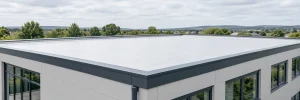
For some flat roofs, restoration may involve preparing and repairing the existing surface before applying a compatible waterproofing system. Suitability depends on adhesion, moisture condition, substrate stability and the detailing around edges, outlets and penetrations.
A coating cannot make saturated insulation or unsound decking suitable to retain. Our guide to where liquid membranes work best on flat roofs explores the considerations behind that option.
A sound restoration proposal therefore explains both what will be renewed and why the retained roof is suitable.
When repair or restoration may not be enough

Replacement may be the more appropriate recommendation when deterioration is widespread or the layers supporting the roof covering are no longer sound. Adding a new surface over a failing build up would leave important problems unresolved.
Examples include extensive decay in timber components, widespread moisture within a flat roof build up or coverings that can no longer support dependable repairs. Structural movement or visible sagging also needs assessment before surface work is specified.
This does not always mean replacing every part of the roof. The appropriate scope depends on which components have failed and whether sound sections can be retained without compromising the result.
Ask the roofer to explain the evidence behind any replacement recommendation, including photographs where available and any limits to the inspection. Age provides useful background, but it should not be the sole reason for choosing replacement over repair or restoration.
How to compare recommendations and plan the next step
Compare proposals by the problems they address, not just by whether they are labelled repair or restoration. Two quotations can use the same description while allowing for very different work.
Before agreeing a scope, ask:
- What caused the problem, and what evidence supports that diagnosis?
- Which materials will be repaired, renewed or retained?
- How will drainage, junctions and adjoining roof areas be addressed?
- What happens if concealed damage is found?
- What maintenance and any applicable warranty conditions follow the work?
For commercial premises, access arrangements and protection of occupied areas should also be discussed. For any building, arranging related work together can avoid repeated access and help ensure adjoining details are treated consistently.
After completion, keep records of the work and arrange inspections appropriate to the roof. Check for visible changes from a safe position, but leave roof access and close inspection to professionals with suitable equipment.
- Repair suits a clearly identified defect where the surrounding roof remains sound.
- Restoration addresses broader deterioration while retaining suitable existing components.
- Moisture, drainage and concealed damage can change the recommended scope.
- Ask for evidence and a clear specification rather than relying on labels alone.
Frequently asked questions
Does a recurring leak mean my roof needs restoration?
Not necessarily. A recurring leak may come from an unresolved defect, an incorrectly diagnosed entry point or wider deterioration. The next step is to establish why water is still entering and whether previous repairs addressed the actual cause.
Can restoration be carried out over an existing flat roof?
Sometimes, provided the existing build up is suitable to retain and compatible with the proposed system. Moisture, adhesion and the condition of the supporting layers need assessment. Wet or defective materials may need removal before further waterproofing work.
What should I do while waiting for a roof inspection?
Avoid climbing onto the roof. Note when leaks occur and take photographs from safe positions. Move belongings away from water where safe. Keep clear of bulging ceilings and any water near electrical fittings, and seek urgent professional assistance where there is an immediate risk.
Get clarity on your roof’s condition
Unsure which approach your roof needs? Talk to Acsap Roofing about roof repairs, restoration and maintenance and the issues you have noticed.