A roof is one of the most important parts of any property. It protects your home from rain, wind, frost, and heat throughout the year. Yet many homeowners are unsure how long different roofing materials actually last or when repairs become necessary.
One of the most common questions we hear is: “How long does a thatched roof last?” The answer depends on the material used, the quality of installation, weather exposure, and how well the roof is maintained over time.
In this guide, we explain the average lifespan of the most common roofing materials used in the UK, including slate, tile, felt, metal, and thatched roofing. We also cover what affects roof longevity, signs of damage to watch for, and how regular maintenance can help you avoid expensive repairs.
Why Roof Lifespan Matters
A roof is a long-term investment. Understanding how long your roof should last helps you:
- Plan for future repairs or replacement
- Spot problems before they become serious
- Protect the value of your property
- Avoid leaks and structural damage
- Reduce long-term maintenance costs
Many roofing systems can last for decades when installed correctly and looked after properly. However, poor workmanship, storm damage, blocked drainage, and neglected repairs can shorten a roof’s life significantly.
At ACSAP Roofing, we often inspect roofs that could have lasted years longer with earlier maintenance and small repairs.
Average Roof Lifespan by Material in the UK
Different roofing materials age at different rates. Some are designed for affordability while others are built for longevity.
| Roofing Material | Average Lifespan |
| Thatched Roof | 20–40+ years |
| Slate Roof | 75–100+ years |
| Clay Tiles | 50–100 years |
| Concrete Tiles | 40–60 years |
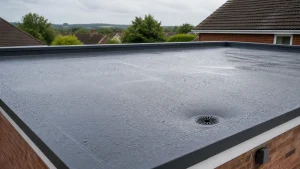
| Felt Flat Roofing | 10–20 years |
| Single Ply Roofing | 20–30 years |
| Metal Roofing | 40–70 years |
The actual lifespan depends heavily on installation quality, maintenance, ventilation, and exposure to weather.
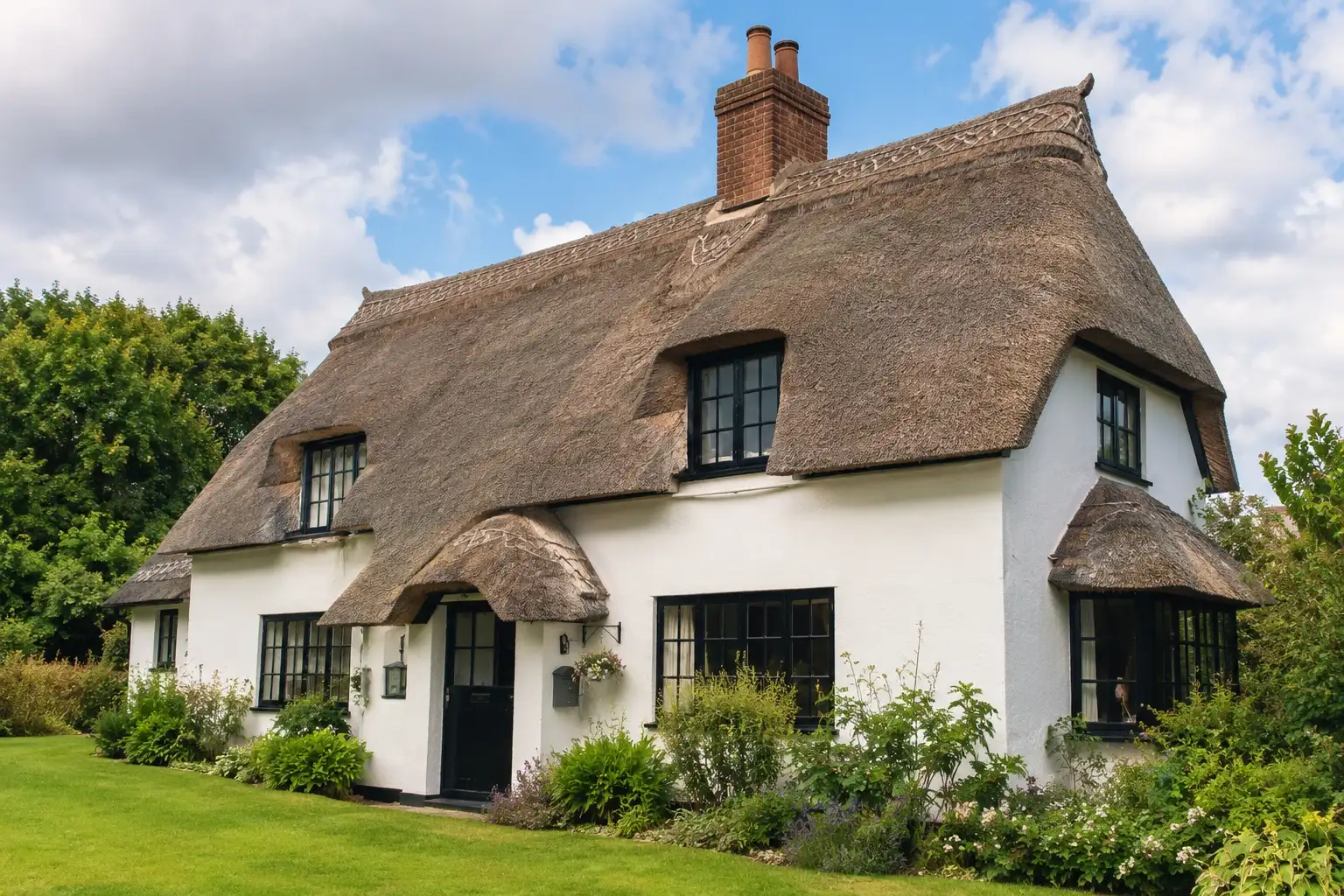
How Long Does a Thatched Roof Last?
The lifespan of a thatched roof depends mainly on the type of thatching material used and how well the roof is maintained over time.
In general:
- Water reed thatch can last between 30 and 40 years
- Combed wheat reed usually lasts 25 to 35 years
- Long straw thatch often lasts 15 to 25 years
- The ridge normally needs replacing every 10 to 15 years
Many people searching for “how long do thatched roofs last” are surprised to learn that the roof structure underneath can survive much longer than the outer layer. With proper care and periodic re-ridging, some traditional thatched roofs remain in excellent condition for decades.
Understanding the Main Types of Thatching Materials
The lifespan of a thatched roof is strongly influenced by the material used.
Water Reed
Water reed is often considered the best material for long-lasting thatched roofs. It is dense, durable, and highly resistant to moisture when installed correctly.
If homeowners ask us, “how long does a water reed thatched roof last?” we usually explain that high-quality water reed can often exceed 40 years in favourable conditions.
Water reed creates a neat finish and performs particularly well on steep roof pitches that allow rainwater to drain quickly.
Combed Wheat Reed
Combed wheat reed offers a more traditional appearance and is commonly used on heritage properties across the UK.
Its lifespan is usually slightly shorter than that of water reed, although skilled installation and regular care can still provide decades of performance.
Long Straw
Long straw is softer in appearance and is often associated with historic cottages.
If you are wondering “how long does a straw thatched roof last?”, the answer is usually between 15 and 25 years, depending on weather exposure and maintenance standards.
Long straw tends to need more regular upkeep because it weathers faster than reed-based systems.
Water Reed vs Combed Wheat Reed
Many homeowners compare water reed vs combed wheat reed when planning a new thatched roof or replacement.
Here is a simple comparison:
| Feature | Water Reed | Combed Wheat Reed |
| Average Lifespan | 30–40+ years | 25–35 years |
| Appearance | Clean and sharp | Traditional and softer |
| Maintenance Needs | Lower | Moderate |
| Cost | Usually higher | Often slightly lower |
| Durability | Excellent | Very good |
The right choice often depends on the style of the property, budget, and local roofing traditions.
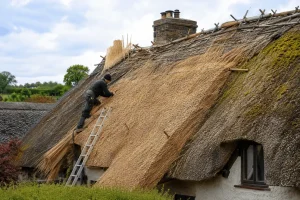
What Affects the Lifespan of a Thatched Roof?
Several factors influence how long a thatched roof lasts.
Roof Pitch
Steeper roofs shed water more effectively. Roofs with shallow slopes tend to hold moisture longer, which increases the risk of decay.
Weather Conditions
Heavy rainfall, coastal winds, frost, and prolonged damp conditions can reduce the lifespan of a thatched roof.
Trees and Shade
Overhanging trees can trap moisture and encourage moss growth. They also reduce airflow, which slows drying after rain.
Quality of Installation
One of the biggest factors is the skill of the roofer or thatcher. Poor workmanship can dramatically shorten roof life.
This is why working with experienced roofing professionals matters. Whether you need heritage work or modern systems like single ply roofing, correct installation always makes a major difference.
Ventilation
Proper airflow helps prevent trapped moisture from causing rot and internal damp issues.
Maintenance Standards
Does a thatched roof need regular maintenance? Absolutely.
Like any roofing system, regular inspections and repairs are essential if you want maximum lifespan and performance.
Thatched Roof Maintenance Tips
Good thatched roof maintenance can add many years to the life of your roof.
We recommend:
- Inspecting the roof annually
- Checking the ridge after storms
- Removing moss and debris carefully
- Keeping nearby trees trimmed
- Watching for signs of sagging or thinning
- Repairing damaged sections early
Ignoring small issues can lead to major structural repairs later.
If your roof needs attention, timely maintenance is often far more affordable than completely replacing a thatched roof.
Signs a Thatched Roof Needs Replacing
Many homeowners are unsure when repair work is no longer enough.
Common thatched roof repair signs include:
- Persistent leaks
- Deep thinning areas
- Visible sagging
- Large patches of moss
- Loose material falling regularly
- Damp smells indoors
- Exposed fixings or netting
- Uneven roof surfaces
These are often the earliest signs that a thatched roof needs replacing or significant restoration work.
How Often Should a Thatched Roof Be Replaced?
People often ask how often a thatched roof should be replaced, but there is no single answer.
The outer coat may last 20 to 40 years, depending on the material used. The ridge usually requires replacement much sooner.
In some cases, skilled roofers can preserve lower layers while renewing only the weathered surface.
This approach can extend the average lifespan of a thatched cottage roof without requiring a full replacement.
Cost of Maintaining a Thatched Roof
The cost of maintaining a thatched roof varies depending on:
- Roof size
- Material type
- Access requirements
- Condition of the existing roof
- Frequency of maintenance
Minor annual maintenance may cost a few hundred pounds, while larger ridge replacements or repairs can cost significantly more.
However, regular maintenance nearly always costs less than allowing deterioration to spread.
How Long Do Other Roofing Materials Last?
Thatched roofing is not the only option available in the UK. Here is how other systems compare.
Slate Roofing
Natural slate is one of the longest-lasting roofing materials available. Many slate roofs survive for more than 100 years when installed correctly.
It is highly durable and performs well in harsh weather conditions. We often recommend slate for homeowners looking for long-term value and traditional appearance.
Clay and Concrete Tiles
Clay tiles offer excellent longevity and a classic appearance. Concrete tiles are more affordable but generally have a slightly shorter lifespan.
Both options perform well across UK weather conditions when maintained properly.
Felt Flat Roofing
Traditional felt systems usually last between 10 and 20 years, depending on installation quality and exposure.
Modern flat roofing systems are more durable than older felt roofs and can provide reliable waterproofing for extensions and garages.
Single Ply Roofing
Single ply membranes are widely used on commercial and modern residential buildings.
High-quality single ply roofing systems can last 20 to 30 years with proper maintenance and inspections.
Metal Roofing
Metal roofs are becoming increasingly popular because they are lightweight, durable, and low maintenance.
Many metal roofing systems last 40 years or more.
Common Mistakes That Reduce Roof Lifespan
We often see avoidable problems that shorten roof life unnecessarily.
Ignoring Small Repairs
Minor leaks can quickly develop into serious structural issues.
Poor Ventilation
Trapped moisture damages both roofing materials and supporting timbers.
Allowing Moss Growth
Moss holds moisture against the roof surface, which accelerates decay.
Hiring Inexperienced Roofers
Poor installation often causes long-term problems. Always work with experienced roofing specialists.
Delaying Inspections
Annual inspections help identify early warning signs before repairs become expensive.
Practical Example: Extending Roof Lifespan Through Maintenance
We recently inspected a traditional property where the ridge had deteriorated badly after years without maintenance.
The homeowners believed the entire roof needed replacing. After a full inspection, we found the main body of the thatch was still in good condition.
By replacing the ridge and repairing several weathered areas, the roof gained many more years of life at a fraction of the cost of full replacement.
This is why regular inspections matter so much.
Final Thoughts
Understanding roof lifespan helps homeowners make smarter maintenance and replacement decisions before problems become serious.
Whether you own a traditional cottage, a modern flat roof property, or a slate-roofed home, regular inspections and quality workmanship are essential for getting the best long-term value from your roof.
At ACSAP Roofing, we provide expert roofing services across a wide range of systems, including heritage roofing, repairs, restoration, flat roofing, and commercial roofing solutions. From small maintenance work to full roof replacement projects, we focus on honest advice, reliable workmanship, and long-lasting results.
If you are concerned about the condition of your roof or want professional guidance on repairs and lifespan, our team is always happy to help. Contact us today to arrange an inspection or speak with our roofing specialists.