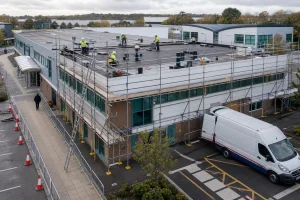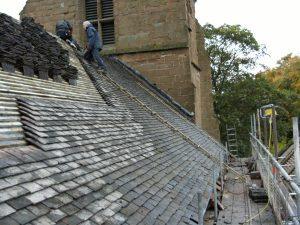

Water ingress is one of the biggest concerns for anyone responsible for a commercial flat roof. A small weakness around a joint, outlet, upstand or roof penetration can quickly become disruptive if it is not dealt with properly.
Single ply roofing is widely used because it creates a continuous waterproof layer over the roof structure. This guide explains how it works, what affects performance and how to compare membrane options with confidence.
What single ply roofing is designed to do
Single ply roofing uses flexible sheets of waterproof membrane to form the main weathering layer on a flat or low pitched commercial roof. The membrane is laid over a prepared roof build up, then joined, detailed and secured so that rainwater is directed safely to outlets, gutters or drainage points.
The aim is simple. The finished roof should resist water, cope with normal building movement and protect vulnerable details such as perimeter edges, rooflights, vents, pipes, plant bases and door thresholds. On many commercial buildings, these details matter as much as the main roof area, because water often finds the weakest route rather than the most obvious one.
For building owners and facilities managers comparing systems, the main benefit of single ply roofing for flat roof waterproofing is that it can provide a clean, consistent membrane layer across large roof areas while allowing careful detailing around complex features.
How the membrane stops water ingress

A commercial flat roof does not rely on one feature alone. It stays watertight because the membrane, joints, fixings, insulation, falls and drainage all work together. The single ply membrane is the visible waterproofing layer, but its success depends on the whole roof being designed and installed as a system.
Most single ply systems are supplied in rolls or sheets. These are positioned across the roof, then jointed using the method suited to that membrane type. Some systems use hot air welded laps, while others use bonded seams or specialist tapes. The key point is that the laps must be formed in a controlled way, with enough overlap, clean surfaces and correct pressure during installation.
Waterproofing also depends on the details. At the roof edge, the membrane needs to be terminated securely so wind and water cannot get beneath it. Around pipes and penetrations, preformed pieces or carefully cut membrane sections are used to create a tight seal. At outlets, the membrane must be dressed so water can leave the roof without sitting around the drain.
Falls and drainage are just as important. A flat roof is rarely completely flat in practice. It should encourage water to move towards drainage points. Standing water can increase stress on the roof, highlight uneven areas and make inspection harder. A good single ply installation considers how water will behave once the roof is finished, not just how the membrane looks on the day it is laid.
Common membrane options and how they differ

Single ply roofing is not one single product. It is a category that includes several membrane types, each with its own installation method, strengths and best use cases. The right choice depends on the building, roof size, access, existing roof condition, insulation requirements and any plant or foot traffic on the roof.
PVC membranes are often chosen for commercial flat roofs because they can be welded at the seams and formed around details. TPO membranes are another thermoplastic option, valued for welded joints and broad commercial use. EPDM is a synthetic rubber membrane that is flexible and commonly used where larger sheets and simple roof shapes are suitable.
There are also differences in how membranes are held in place. Some systems are mechanically fixed, using fixings and plates beneath the laps. Some are adhered to the substrate. Others may be ballasted where the roof design allows it. The fixing method affects wind resistance, detailing, roof loading and compatibility with the existing structure.
When comparing options, it is worth asking practical questions rather than focusing only on product names. How will the seams be formed? How will roof penetrations be sealed? What happens at upstands and edges? Is the roof likely to need regular access for maintenance? Is the existing substrate suitable, or will preparation be needed first?
Where a roof has an existing surface that may be suitable for overlay, coating or refurbishment, a liquid system can sometimes be considered alongside single ply. Acsap Roofing also provides roof coating and liquid membrane solutions, which can be useful where the roof condition and project requirements point towards that approach.
Why preparation makes such a difference

A strong single ply roof begins before the new membrane is installed. The roof needs to be surveyed so defects, moisture risks, poor falls, damaged insulation, weak decking and drainage issues are understood. Skipping this stage can leave hidden problems beneath a new waterproofing layer.
Preparation may include cleaning the roof, removing loose material, repairing local damage, improving outlets, checking upstands and assessing whether the existing build up can remain. If insulation is being added or upgraded, it needs to be compatible with the membrane system and fixed or bonded correctly.
The substrate should be stable, dry enough for the chosen method and suitable for the system being applied. Any sharp edges, debris or uneven areas can affect the membrane. On occupied commercial sites, planning also matters. Access routes, safe working zones, material storage and weather windows all influence how smoothly the project runs.
This is where a specialist contractor adds value. Commercial roofs often include plant, vents, rooflights and service penetrations that make detailing more demanding than a simple open area. For wider building requirements, Acsap Roofing covers commercial and industrial roofing services as well as dedicated single ply systems.
What buyers should check before choosing a system
Before deciding on a single ply roof, it helps to build a clear brief. The contractor should understand the building use, roof access needs, drainage condition, existing roof build up and any future plans such as additional plant, solar panels or maintenance walkways.
Buyers should also ask how the finished roof will be inspected. A professional installation should include checks to seams, outlets, corners, edges and penetrations. These areas are where workmanship is most visible and where future issues are most likely to begin if detailing is poor.
It is also sensible to consider maintenance at the buying stage. A flat roof should be easy to inspect, with clear drainage routes and sensible access arrangements. If the roof will be visited regularly by maintenance teams, protection such as designated walkways may be appropriate to reduce wear on the membrane.
Useful checks include:
- Whether the existing roof has trapped moisture or hidden damage.
- How rainwater will drain from the finished roof.
- Which membrane type is being proposed and why.
- How seams, outlets, upstands and penetrations will be detailed.
- Whether the roof needs extra protection for regular access.
For buildings where keeping activity running matters, it can also help to plan the works around access, phasing and communication. Acsap Roofing has covered this topic in more detail in its guide to keeping business disruption low during commercial roof works.
How maintenance keeps the roof performing
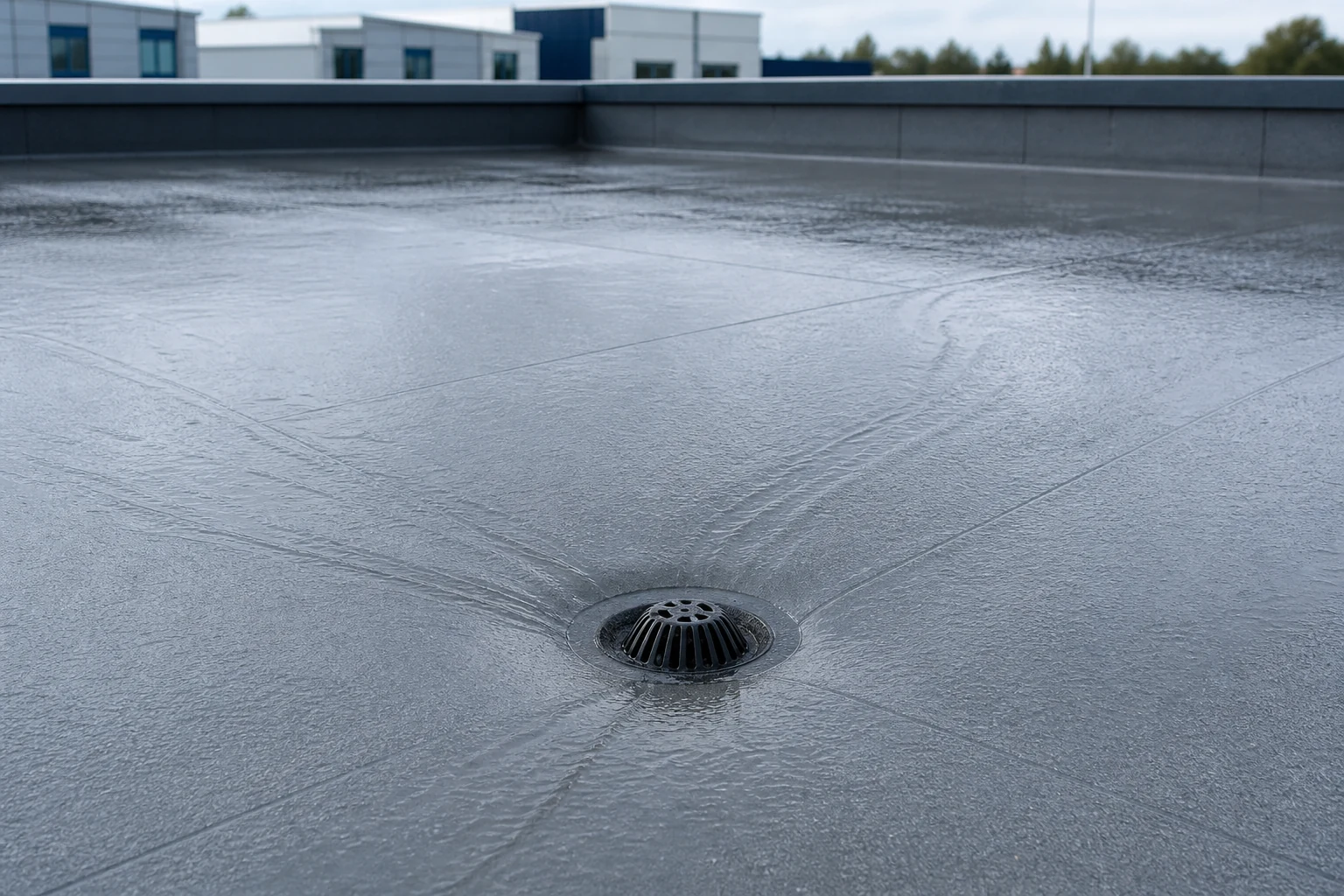
Single ply roofing is designed to be durable, but it still benefits from routine inspection and sensible maintenance. Flat roofs collect leaves, wind blown debris and surface dirt, especially around outlets and corners. Keeping drainage clear helps water leave the roof as intended.
Inspections should look at seams, edge details, outlets, rooflights, pipe penetrations and any areas where people walk. If plant engineers or other contractors access the roof, accidental damage can occur, so it is worth checking after works have taken place.
Small issues are usually easier to manage when they are found early. A loose detail, blocked outlet or local puncture can be investigated before it affects the internal building. Maintenance also creates a record of roof condition, which helps with future planning and budgeting.
A good maintenance approach is practical rather than complicated. Keep the roof clear, inspect the vulnerable details, control access where possible and ask a roofing professional to assess anything that looks damaged, lifted or poorly drained.
- Single ply roofing protects commercial flat roofs by creating a continuous waterproof membrane over the roof build up.
- Seams, outlets, upstands, edges and penetrations are critical because water often enters through weak details.
- PVC, TPO and EPDM membranes differ in how they are joined, fixed and detailed, so the right choice depends on the building.
- Preparation, drainage and professional installation are just as important as the membrane itself.
- Routine inspection and maintenance help keep the roof watertight and easier to manage.
Frequently asked questions
Is single ply roofing suitable for all commercial flat roofs?
It is suitable for many commercial flat and low pitched roofs, but the existing roof condition, structure, drainage, access needs and building use should be assessed first.
How does single ply compare with liquid roof coating?
Single ply uses sheet membranes that are joined and detailed across the roof. Liquid systems are applied as coatings and can be useful for certain refurbishment projects. The best option depends on the roof condition and project goals.
What usually causes leaks on a flat roof?
Leaks often begin around vulnerable details such as outlets, seams, upstands, rooflights, pipe penetrations or damaged areas where water can track beneath the weathering layer.
Does a single ply roof need maintenance?
Yes. Maintenance helps keep outlets clear, checks seams and details, and spots damage early, especially on roofs that are accessed for plant or building services.
Plan a watertight commercial roof
If you are reviewing options for a commercial flat roof, Acsap Roofing can assess the roof, explain suitable membrane choices and recommend a practical way forward.