Commercial roof works do not have to mean bringing day-to-day activity to a halt. With the right planning, access arrangements and communication, many premises can remain usable while essential roofing work is carried out.
Whether the project involves repairs, refurbishment, coating, cladding or a new roof covering, disruption is managed best when it is considered from the very start. A professional roofing contractor will plan the work around people, premises and operations, not just the roof itself.
Planning starts with how the building is used
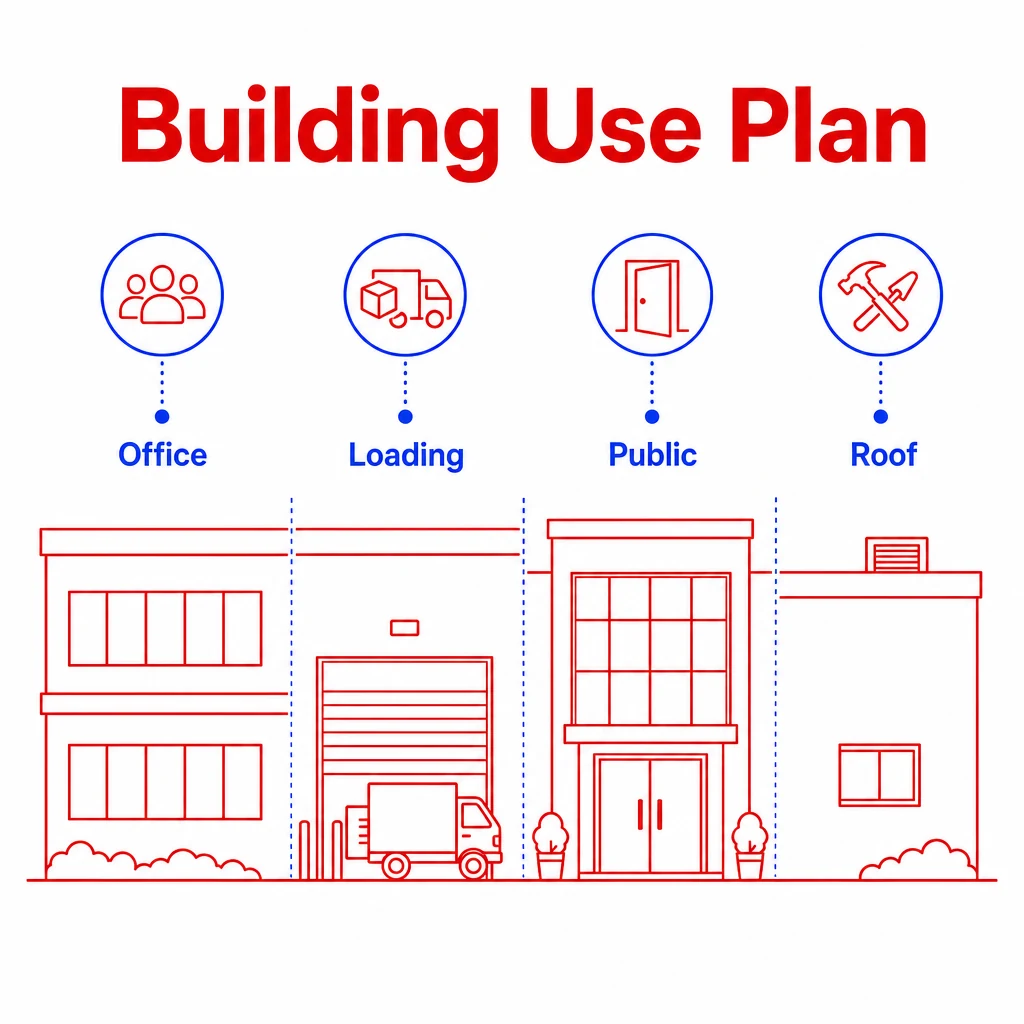
The first step in keeping disruption low is understanding how the site works on a normal day. A commercial or industrial roof is often above offices, workshops, storage areas, customer spaces, loading bays or production zones. Each area may have different access needs, safety considerations and working patterns.
Before work begins, a roofing contractor should discuss matters such as operating hours, staff and visitor routes, vehicle movements, deliveries, security procedures and any areas that are especially sensitive to noise or temporary restrictions. This helps shape a realistic programme that supports the business while allowing the roofing team to work safely and efficiently.
For larger sites, this may include a phased approach. Instead of treating the whole roof as one work area, the contractor can divide it into manageable zones. This keeps sections of the premises available while work progresses elsewhere. It also makes it easier to coordinate scaffolding, materials, waste removal and weather protection.
Acsap Roofing’s commercial and industrial roofing service is built around this kind of practical planning, helping building owners and facilities teams keep projects organised from survey through to completion.
Safe access protects people and keeps routes clear
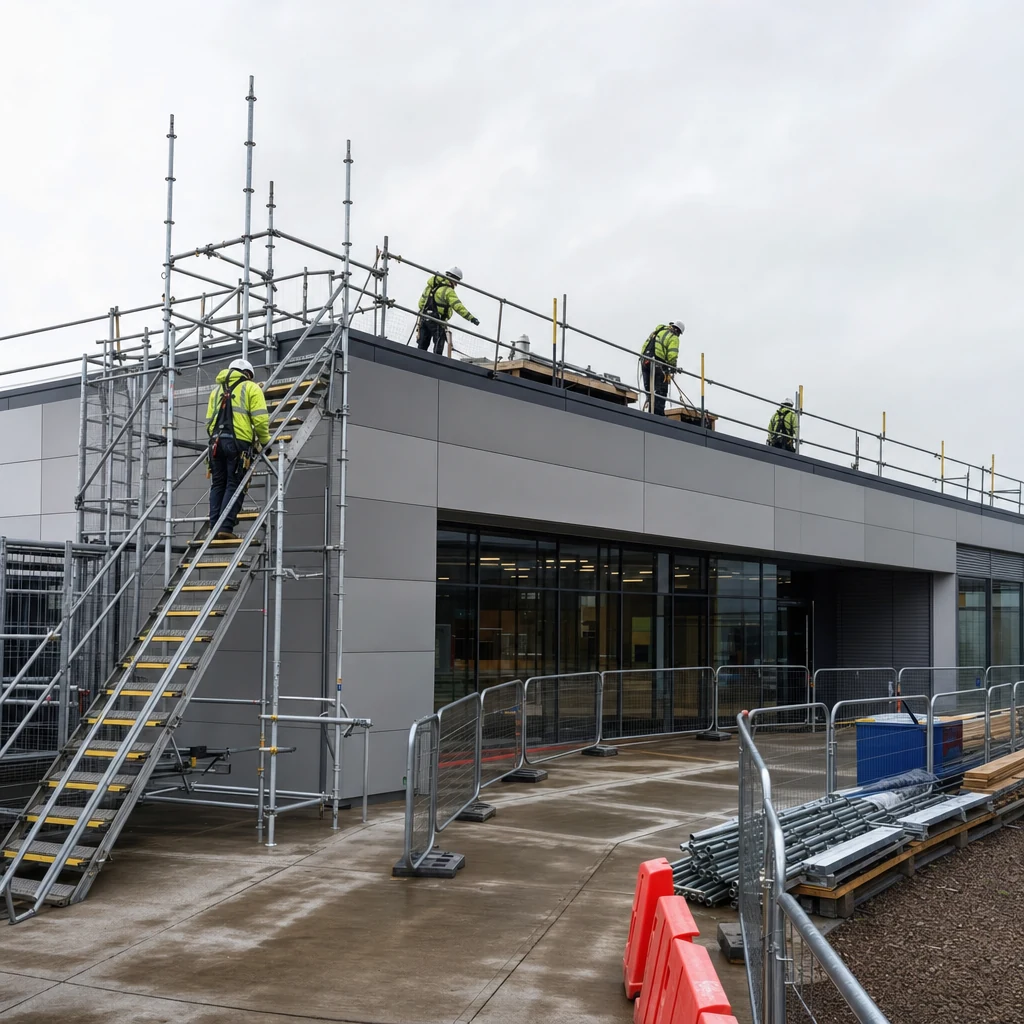
Access is one of the biggest influences on how smoothly roof works run. Poorly planned access can affect entrances, car parks, service yards and pedestrian routes. Well-planned access, by contrast, helps the site feel controlled, professional and easy to navigate.
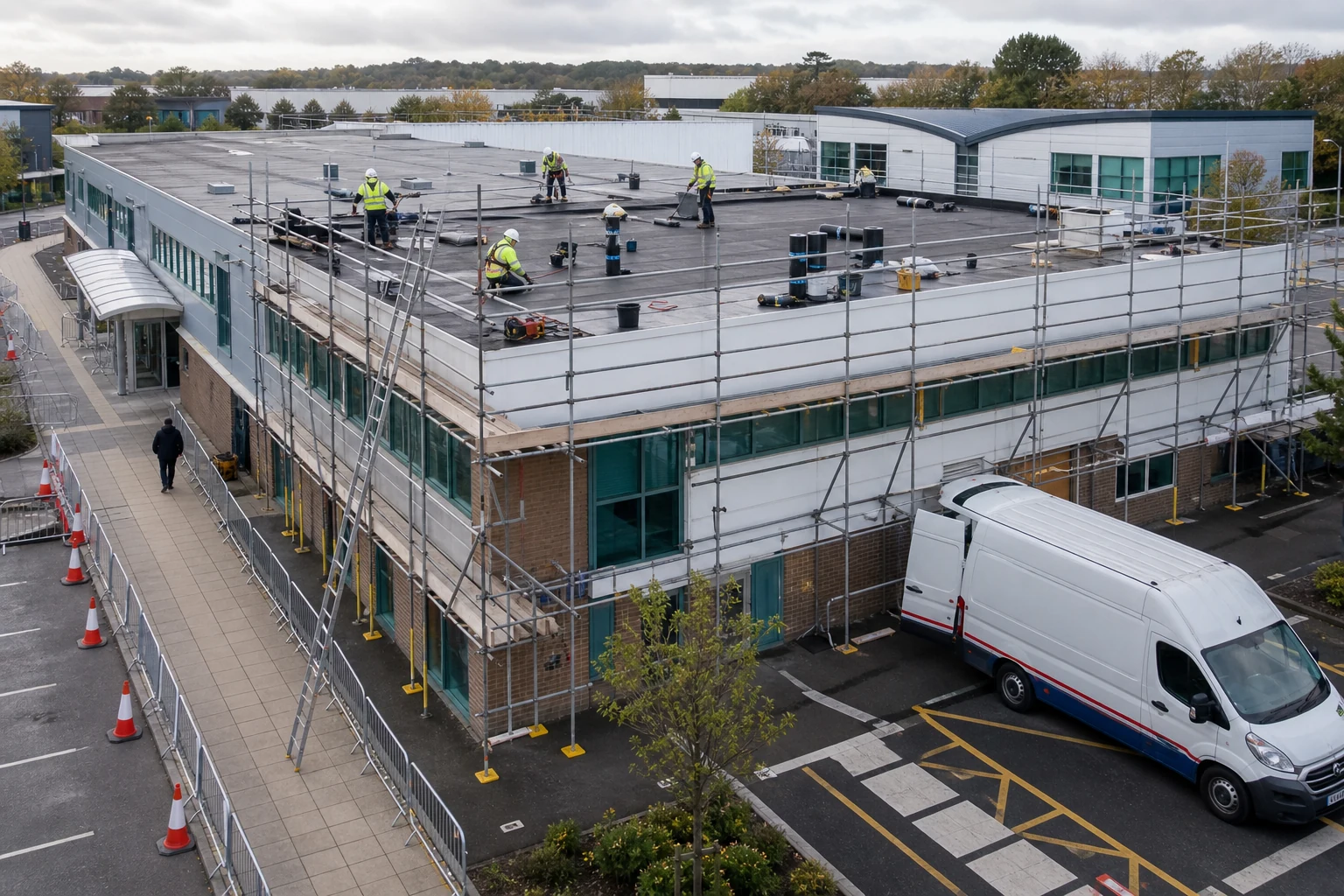
Depending on the building, access may involve scaffolding, ladders, roof edge protection, mobile towers, plant or carefully controlled working zones. The aim is to give roofers safe access to the work area while keeping staff, visitors and contractors away from risk. Professional roofers should use appropriate PPE such as hard hats, hi-vis clothing, gloves, harnesses where required and suitable work boots.
Clear signage, barriers and agreed access routes are important. Deliveries of roofing materials should be timed and positioned to reduce interference with normal site traffic. Waste should also be managed in a tidy, planned way so that working areas remain professional and usable.
On industrial buildings, access planning may also consider rooflights, fragile surfaces, plant rooms, vents, extraction units and existing services. These details matter because they allow the roofing team to move safely without interrupting essential building functions more than necessary.
Sequencing keeps key areas available
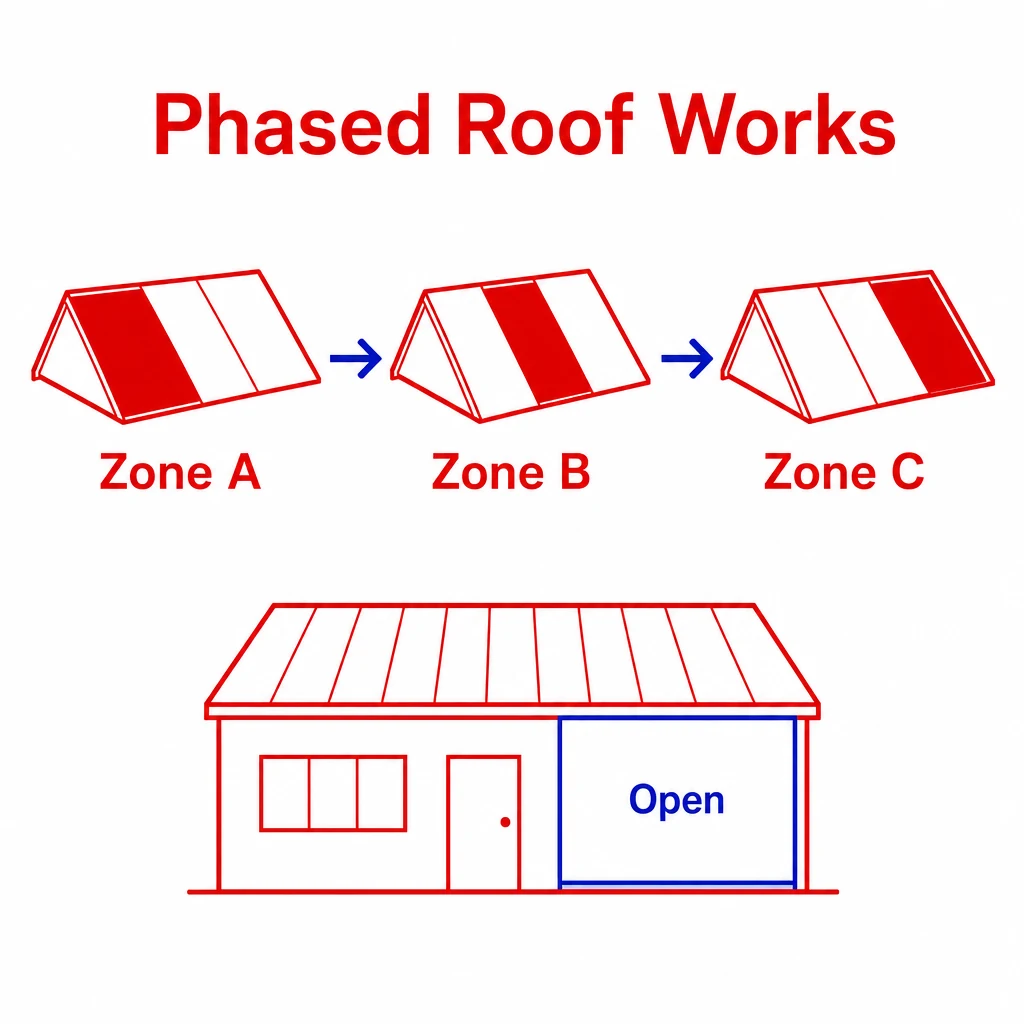
Sequencing is the order in which roof works are carried out. It is one of the most useful tools for reducing disruption because it allows the contractor to prioritise areas in a way that suits the building and the people using it.
For example, a roof above a main entrance, reception area or loading bay may be scheduled at a carefully agreed time. Work above less sensitive areas may be completed first, giving the team a chance to establish the site set-up before moving to more operationally important zones.
The best sequence depends on the roof type and the proposed system. Pitched tiled roofs, flat roofs, profiled metal roofs and liquid-applied systems all have different practical requirements. A refurbishment may involve removing damaged materials, repairing deck areas, installing membranes, improving details around penetrations and completing finishing works in stages.
For metal roof and cladding projects, a contractor may recommend specific phasing for sheets, flashings, gutters and junctions. You can find more about this type of system on Acsap Roofing’s profiled metal roofing and metal cladding page.
Flat roof areas also benefit from careful sequencing, especially where waterproofing must be maintained throughout the project. Traditional felt systems and modern membranes each require the right preparation and detailing. Acsap Roofing explains more about these options on its felt roofing page.
Communication makes the programme easier to live with
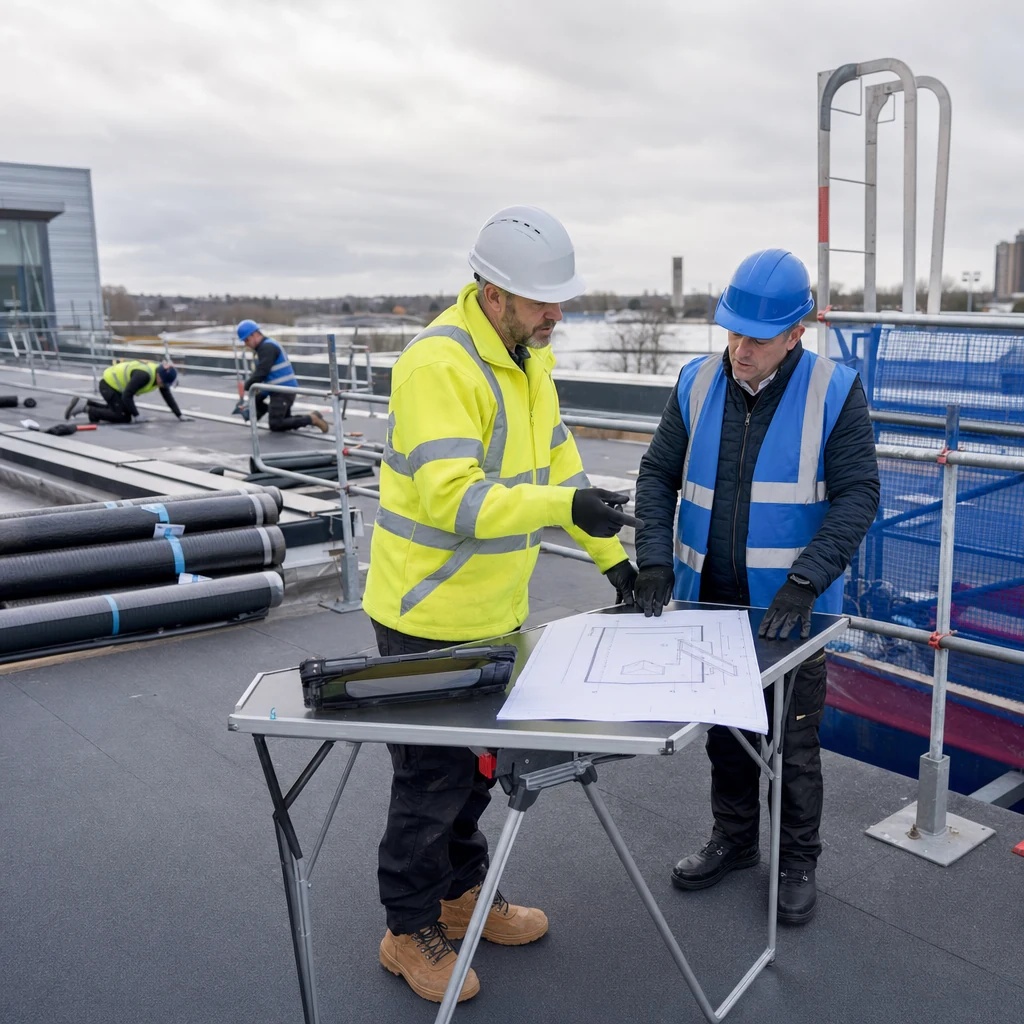
Even a well-planned project needs clear communication. Building managers, business owners, tenants, staff and other contractors all benefit from knowing what is happening, where it is happening and what to expect next.
Useful communication normally includes:
- the intended work sequence and areas affected each day or phase;
- temporary changes to access, parking or deliveries;
- any short periods where noise or movement may be more noticeable;
- who to contact with site questions;
- how weather-related changes will be handled.
This does not need to be overcomplicated. A simple, consistent update can help people plan their own work and reduce uncertainty. It also helps the roofing team respond quickly if a site priority changes.
For occupied premises, communication is especially important around shared entrances, customer-facing areas and internal spaces below the roof. If ceiling access, internal protection or short-term exclusion areas are needed, early notice allows the business to make practical arrangements.
Professional roofers should also communicate clearly about quality checks. Commercial roofing is not just about covering large areas; it is about details such as laps, outlets, upstands, fixings, gutters, trims and junctions. Keeping these checks visible gives building owners confidence that progress is controlled and purposeful.
Choosing the right roofing solution can reduce interruption
The specification itself can have a direct effect on disruption. In some cases, a full replacement is the right answer. In others, refurbishment, localised repairs, coating or overlay systems may be suitable after a proper survey. The correct approach depends on the condition of the roof, the structure below, existing waterproofing, insulation, drainage and long-term performance needs.
Liquid-applied systems can be particularly useful for certain refurbishment projects because they are designed to form a continuous waterproof layer around details and penetrations. They still require expert preparation and installation, but they can be a practical option where the aim is to renew waterproofing with a controlled programme. Acsap Roofing provides more information on roof coating and liquid membranes.
Repairs and maintenance can also play an important role. Addressing defects early may help avoid more intrusive work later. Planned inspections can identify issues such as blocked gutters, damaged flashings, loose fixings, failed seams, cracked coverings or areas where water is not draining properly.
The same principle applies across building types. Domestic roofs require care around residents and neighbours, while commercial roofs add factors such as operations, staff, customers and site logistics. Acsap Roofing’s domestic roofing information shows how the same attention to workmanship applies in a different setting.
If you want to see the range of roofing work a contractor undertakes, browsing roofing case studies can also help you understand methods, materials and project types before starting a discussion.
- Disruption is reduced when access, safety and sequencing are planned before work starts.
- Phased roof works can help keep important areas of a building available.
- Clear communication helps staff, visitors and site managers know what to expect.
- The right roof specification can make the project more practical for an occupied premises.
- Regular maintenance can support smoother, more manageable future roofing work.
Frequently asked questions
Can a business stay open during commercial roof works?
Often, yes. It depends on the building, the roof condition and the type of work required. A professional contractor can plan access, phasing and safety measures to help keep usable areas open where practical.
How is safety managed on an occupied site?
Safety is managed through suitable access equipment, barriers, signage, PPE, agreed routes and controlled work zones. The aim is to separate roofing activity from staff, visitors and normal site movement.
What happens if weather affects the programme?
Roofing programmes should allow for weather-sensitive tasks. Good communication is important so the site team and building manager understand any adjustments and how temporary protection will be maintained.
Is refurbishment always less disruptive than replacement?
Not always. Refurbishment can be a good option for some roofs, but the best solution depends on the existing roof, structure and performance requirements. A survey helps determine the most suitable approach.
Planning roof works around your business?
Speak to Acsap Roofing about a practical, well-organised approach to commercial and industrial roofing.